

Sudden Cardiac Arrest (SCA) is among the most critical onboard medical emergencies. With no warning signs and rapid onset, survival depends entirely on swift crew intervention.
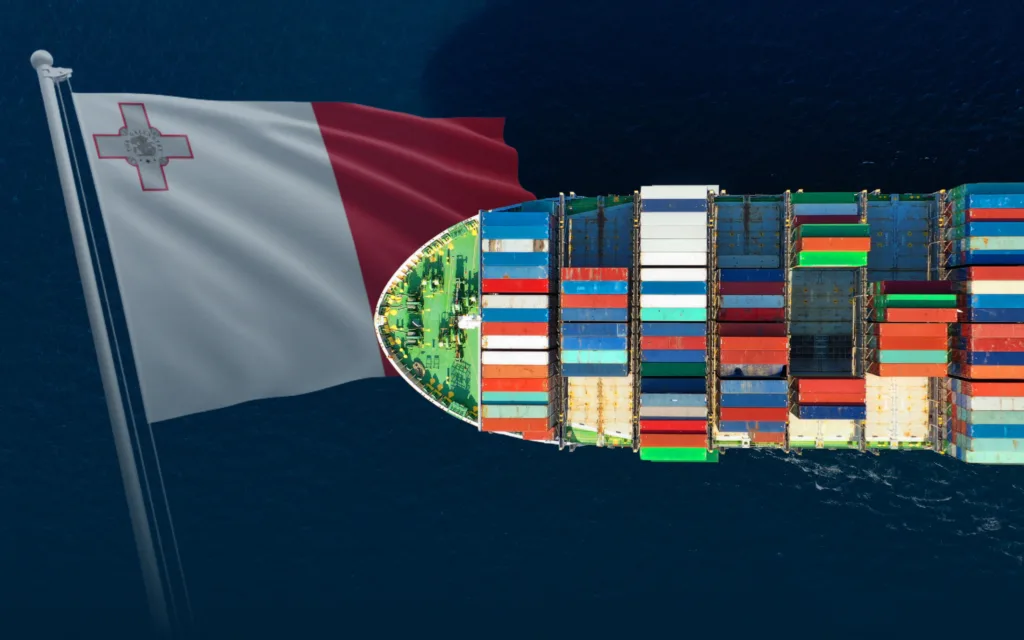
In August 2025, Transport Malta released Merchant Shipping Notice 198 (MSN 198), signalling a critical shift in onboard medical preparedness. This new guidance strongly recommends that Maltese-flag vessels operating beyond GMDSS Sea Area A2 carry an Automated External Defibrillator (AED) suitable for the marine environment.
This change by Transport Malta comes almost a year after Denmark regulated that all category A and B vessels carry a CE-marked defibrillator as a standard part of their medical chest equipment. In recognition of the enhanced risks associated with cardiac health for those working away from shore in an often stressful environment.
With the release of MSN 198, Transport Malta now strongly recommends the carriage of a marine-grade AED onboard Maltese-flag vessels. AEDs are designed to diagnose and treat SCA by delivering an electric shock that restores a normal heart rhythm – something CPR alone cannot achieve.
This update places cardiac response equipment alongside established safety essentials, signalling the growing expectation that vessels must be capable of delivering immediate lifesaving intervention offshore.
MSN 198 recommends that every vessel sailing beyond GMDSS Sea Area A2 should carry out a comprehensive risk assessment to determine if an AED should be carried on board.
As you conduct this risk assessment, consider the following criteria:
| The Key Consideration | The Defining Fact |
|---|---|
| Will your vessel be operating beyond GMDSS Sea Area A2? | This means sailing beyond the range of coastal VHF radio (typically 150 nautical miles offshore) where immediate shore support is inaccessible. If the answer to this question is yes, then you need a defibrillator. |
| Is CPR enough? | No. While CPR is vital, it only buys time. Without defibrillation, a patient’s chances of survival decrease by 10% for every minute that passes. |
| How quickly can you get shore-based medical support in an emergency? | Defibrillation is the only definitive treatment that can restore the heart’s normal rhythm. If professional help is delayed, an AED is the crew’s best resource. |
Heart and circulatory problems are the world’s biggest killers. While the risks increase with age and are more common in men, SCA can strike anyone, at any time, without warning.
At sea, you are the first responder. Professional medical help isn’t just minutes away. When SCA occurs on a vessel, offshore platform, or in a remote port, the onboard crew become the only immediate lifeline.
Every minute counts. Survival from cardiac arrest drops by 10% for each minute that passes without treatment. Offshore, that already narrow timeframe shrinks even further: the ‘ten-minute window’ closes long before a medevac helicopter can reach you. An onboard defibrillator bridges that critical, life-threatening gap.
A defibrillator is the only definitive treatment for SCA. While First Aid and CPR skills are essential, they often only buy time until a defibrillator can be applied. Without one on board, survival becomes a matter of chance.

Meeting the new Transport Malta guidance means choosing the right equipment for the challenging marine environment.
When selecting an AED, you need to prioritise the following characteristics:
Compare Our Defibrillators |
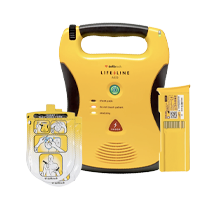
Lifeline AED£942 – £986 |

Lifeline Auto£999 – £1,049 |

Lifeline View£1,376 |

Lifeline View Auto£1,418 |
| Battery Capacity | Standard & High Capacity | Standard & High Capacity | High Capacity | High Capacity |
|---|---|---|---|---|
| Screen | No Screen | No Screen | Full Colour Screen | Full Colour Screen |
| Shock Type | Semi-Automatic | Fully Automatic | Semi-Automatic | Fully Automatic |
| No. of Shocks | 125 / 300 * | 125 / 300 * | 125 | 125 |
| Hours of Continuous Operation | 8 / 16 * | 8 / 16 * | 8 | 8 |
| Languages Programmable | English | English | English, Dutch, German, and French | English, Dutch, German, and French |
| Size | 22 x 30 x 7 cm | 22 x 30 x 7 cm | 18.5 x 24 x 5.8 cm | 18.5 x 24 x 5.8 cm |
| Weight | 1.9kg / 2kg * | 1.9kg / 2kg * | 1.4kg | 1.4kg |
* – Multiple answers are for Standard Capacity Battery / High Capacity Battery
Transport Malta’s MSN 198 makes it clear: the standard for crew safety has been raised. Protecting your most valuable asset – your people – requires a tangible commitment, making an AED as crucial as carrying life rafts, EPIRBs, and survival suits.
Contact us today for guidance and a tailored solution to ensure compliance and protect what matters the most.